
PRINTED OFFSET BAGS
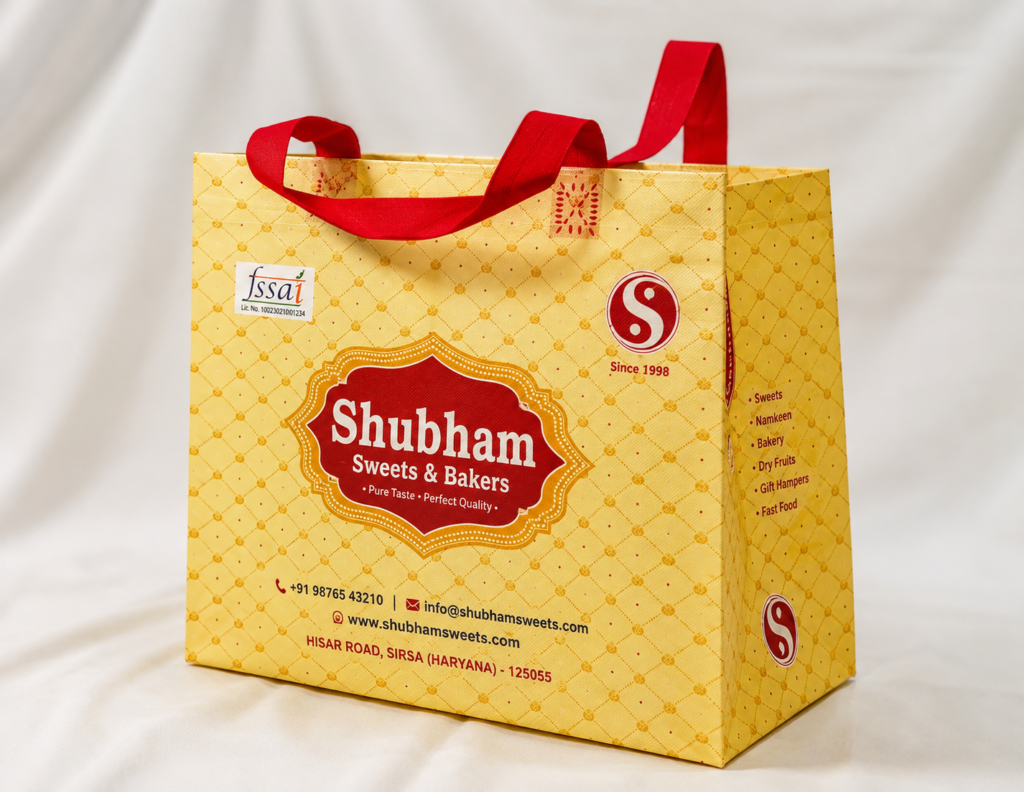
PRODUCT DETAILS
Material
Used For
Colours
Sizes
Laminated Non-Woven Fabric
Shopping Bags
Multi-Colour Printing (Customized Also)
All Sizes
PRINTED OFFSET BAGS
Printed Offset Non Woven Bags are bags made from PP non-woven fabric on which customized artwork is applied using an offset printing process.
In simple words, these bags combine three important elements:
Non-Woven Fabric + Durable Bag Construction + Detailed Printing
The result is a practical reusable bag that can also work as a branding and promotional tool.
Depending on the bag design and manufacturing process, offset printing can be applied to suitable non-woven materials or laminated surfaces. Manufacturers use specialized bag-printing equipment to transfer the ink through printing units onto the non-woven bag or sheet.
KEY FEATURES OF PRINTED OFFSET BAGS
- HIGH-QUALITY PRINTING
- DURABLE NON-WOVEN FABRIC
- MULTI-COLOUR DESIGNS
- CUSTOMIZABLE DESIGN
- LARGE PRINTING AREA
- LIGHTWEIGHT
HOW ARE PRINTED OFFSET PRINTING BAGS MADE ?
The manufacturing process generally involves several stages.
STEP 1: SELECTION OF NON-WOVEN FABRIC
The appropriate PP non-woven fabric is selected according to the required bag size, strength, appearance, GSM, printing method, and intended application.
Fabric characteristics can have a significant effect on printing. A more uniform surface can help produce cleaner and sharper printed graphics.
STEP 2: BAG DESIGN
The artwork is prepared according to the required bag dimensions. The design may include a company logo, product photographs, illustrations, contact information, tagline, or promotional message.
STEP 3: PRE-PRESS PREPARATION
The artwork is prepared for the selected printing process. For multi-colour work, the design is separated and prepared according to the printing requirements.
STEP 4: PRINTING
In an offset printing process, the image is transferred through a printing plate and intermediate printing surface before reaching the final substrate. Specialized non-woven bag printing machines can transfer ink through printing units directly onto suitable bags or sheets.
STEP 5: CUTTING AND BAG MAKING
Once the printed material is ready, it can be converted into the required bag design through cutting, folding, stitching, heat sealing, or other suitable manufacturing processes.
STEP 6: HANDLE ATTACHMENT
Handles are attached according to the selected bag design. Different options may include D-cut, W-cut, U-cut, loop handles, or other customized handle constructions.
STEP 7: QUALITY CHECK
The finished bags are checked for printing quality, stitching, handle strength, dimensions, finishing, and overall appearance before packaging and dispatch.
TYPES OF PRINTED OFFSET BAGS
Printed offset technology can be used with different non-woven bag designs, depending on the machine, fabric, and manufacturer’s production capabilities.
1. OFFSET PRINTED D-CUT NON WOVEN BAGS
D-Cut bags have handles cut directly into the upper portion of the bag. They are commonly used by retail stores, grocery businesses, pharmacies, and promotional companies.
2. OFFSET PRINTED W-CUT NON WOVEN BAGS
W-Cut bags feature a distinctive W-shaped handle and are suitable for shopping and promotional applications.
3. OFFSET PRINTED U-CUT NON WOVEN BAGS
U-Cut bags have U-shaped handles and are commonly used for everyday shopping and retail packaging.
4. OFFSET PRINTED LOOP HANDLE BAGS
Loop handle bags have separately attached handles and can provide a more premium appearance. They are suitable for boutiques, retail stores, corporate promotions, exhibitions, and gifting.
5. OFFSET PRINTED BOX BAGS
Box-style non-woven bags have a structured base and side gussets, allowing them to accommodate products more comfortably. They are suitable for retail packaging and promotional applications.
6. OFFSET PRINTED LAMINATED NON WOVEN BAGS
Lamination provides a smoother surface that can improve the appearance and sharpness of printed graphics. Laminated and BOPP-laminated non-woven materials are commonly used where a more polished or premium visual finish is required.